Cape Verde: what to know before you go
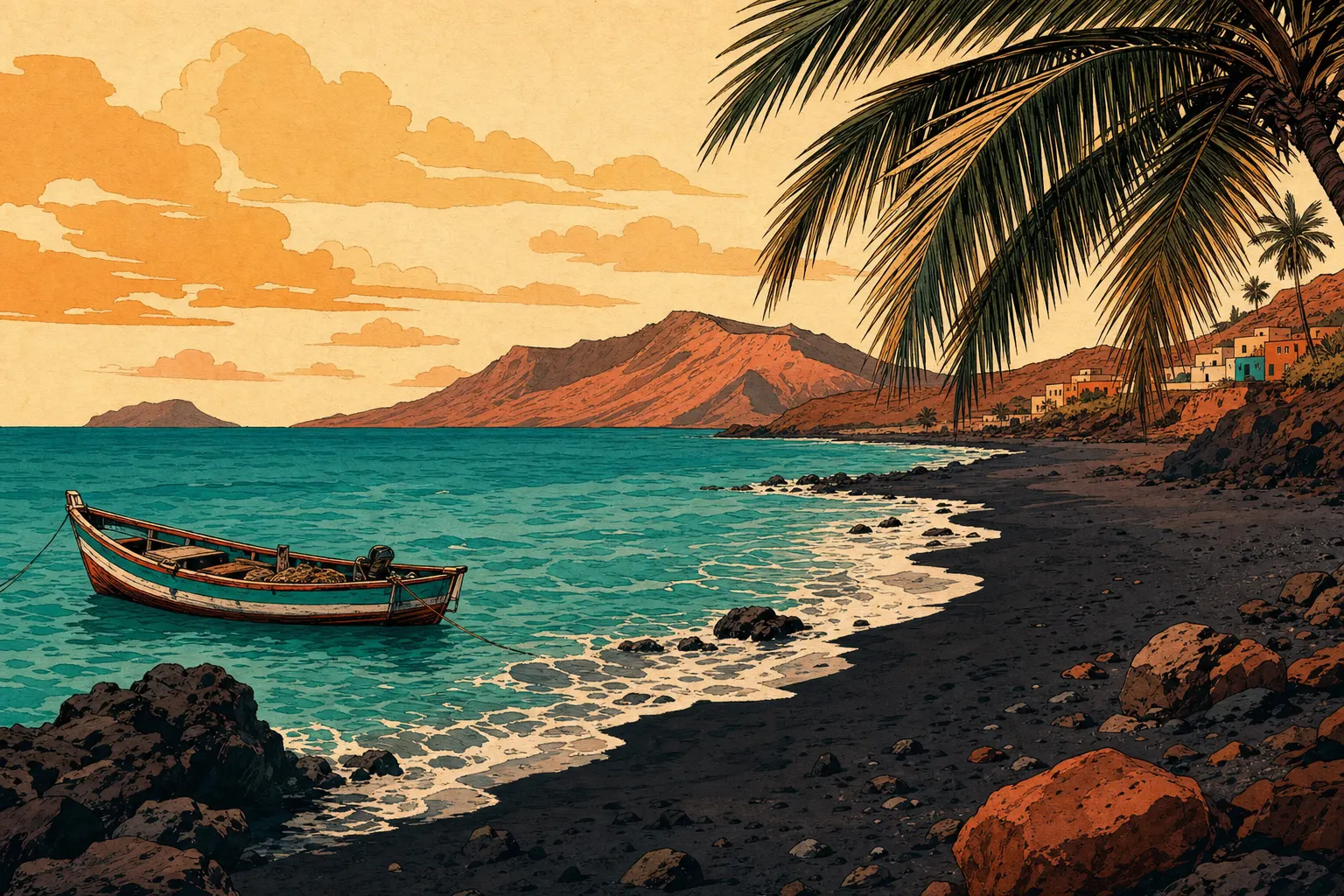
Cape Verde captivates with its black sand, its music stitched into the skin, and its ten islands that never look alike. You go for a beach and come back with a morna stuck in your head, a bottle of grogue in your suitcase and the urge to return. Before you drop your bags, it pays to understand the nuances of this archipelago and avoid the small letdowns that spoil the start of a trip.
This guide gathers the essentials, from climate to transport, from money to food, taking in the classic traps and local customs along the way. Enough to travel relaxed, leaving nothing that matters to chance.
When to go: climate and seasons
Cape Verde has a dry climate, more arid than you would expect from a tropical archipelago. It rains little, sometimes not at all for months, and islands like Sal or Boa Vista border on desert. That means sunshine almost all year round, but also a landscape on the eastern side that is more mineral than lush.
The dry season, from November to June, is the most comfortable window. Clear skies, temperatures around 25 °C, and a sea that invites swimming without surprises. This is when the archipelago is at its best for anyone after beaches and doing nothing.
From July to October, the heat climbs and short showers can fall, especially on mountainous islands like Santo Antão or Santiago. It is not a real monsoon, more passing bursts that turn the highlands green. Hikers love this window: the farming valleys go green and the air smells of wet earth.
One detail worth knowing: the harmattan, that dust-laden wind off the Sahara, can veil the sky for a few days between December and February. Nothing serious, but the light turns milky and photos lose a little of their bite. Surfers and kitesurfers, for their part, aim for winter, when the trade winds blow hard and steady over Sal.
Safety: the city is not the beach
In Praia as in Mindelo, stay alert, especially at night. Snatch thefts happen in certain neighbourhoods, but nothing a bit of common sense will not handle. This is not a dangerous country, just a place calling for the basic urban precautions that apply in any capital.
On the beach islands like Sal or Boa Vista, the mood is far calmer. Hotels play their part, beaches are watched over, and the sense of safety is constant. Plenty of travellers walk around in the evening without a second thought, which says a lot about the general climate.
Useful habits in urban areas
- No valuables on show in the street.
- Phone out of reach of passing scooters.
- Official taxi after 10pm, never on foot down an isolated alley.
- Bag closed and worn in front of you in crowded markets.
A word on the wilder beaches: currents can be treacherous, particularly on the west coast of Santiago and some coves on Boa Vista. Always ask locals before swimming away from supervised areas. The Cape Verdean sea is beautiful, but it does not forgive carelessness.
Health: three habits that change everything
Tap water is not drinkable. Sealed bottled water, factory ice, peeled fruit: the classic trio works and spares you the stomach bug that wrecks a trip. Most hotels filter their water, but when in doubt, stick to the bottle.
Mosquitoes are active at dusk. A DEET repellent and long sleeves as the day fades are enough to slip through unbitten. Malaria risk is very low, confined to Santiago in the rainy season, but there is no reason to get eaten alive for nothing.
On paperwork, no vaccine is compulsory for travellers coming from Europe, except yellow fever if you transit through a country at risk. Check that your tetanus and hepatitis boosters are current, pack a small kit (anti-diarrhoeal, paracetamol, high-factor sunscreen) and consider insurance covering repatriation, since medical facilities remain limited outside the main towns.
Getting around the ten islands
This is probably what travellers underestimate most. Cape Verde is not a place where you string five islands together in a week without stress. Sea distances are long and connections are not always daily. Better to pick two or three islands well than to race everywhere.
Inter-island flights
The national carrier links the main islands on short hops (often under an hour). It is fast and convenient, but prices climb quickly and schedules sometimes change without warning. Book ahead, especially in high season, and leave a buffer if you have an international flight to catch afterwards. A domestic delay can turn into a connection headache fast.
Ferries
The boat remains the cheap option and, let us be honest, the more adventurous one. The legendary crossing between São Vicente (Mindelo) and Santo Antão takes about an hour and offers superb views. Other routes exist, but the sea can be rough: if you get seasick easily, come prepared. Confirm timetables locally, as they shift with the weather and the season.
The aluguer, the local shared taxi
On every island, the aluguer is the everyday way to travel: a minibus or a converted pick-up that leaves once full and follows a fixed route. It is cheap, authentic, and it is often where you meet people. You wait for the vehicle to fill, you squeeze in a little, you chat. To explore Santo Antão or Santiago without spending a fortune, it is unbeatable, provided you accept the local pace and are in no hurry.
Money: escudo, cards and tipping
The currency is the Cape Verdean escudo (CVE), pegged to the euro at a fixed rate (around 110 escudos to one euro). That makes mental maths easy: divide the price in escudos by a hundred for a rough figure in euros. The euro is in fact accepted in many hotels and tourist shops, though often at a slightly unfavourable rate.
Cards work in the tourist infrastructure of Sal and Boa Vista, but as soon as you move away, cash is king. Withdraw escudos from ATMs in the larger towns (they are sometimes temperamental or out of notes) and always keep cash for markets, aluguers and small family restaurants. Tell your bank you are travelling to avoid your card being blocked out of the blue.
Tipping is not a rigid obligation but it is appreciated. In a restaurant, rounding up or leaving 5 to 10 % goes down well and fits the spirit of the place. For a hiking guide or an aluguer driver who has been warm with you, a small gesture always lands right. Nothing showy, just gratitude.
Scams: spotting them, dodging them, haggling
The most common scenario is still the taxi with no meter. Always agree the price before getting in, asking twice if that is what it takes to pin the fare down. Once the price is stated and accepted, there is no nasty surprise on arrival.
The guides who latch on to you outside the airport are rarely official. A firm no, thank you closes the conversation cleanly. Be wary too of very persistent sellers on the beaches of Santa Maria: most are friendly, some push a little too hard. A smile and a clear answer are enough.
Haggling without getting fleeced
In the markets, prices move. Knowing the rough figure (a meal, a ride, a souvenir) stops you paying triple. A few words of Portuguese or Cape Verdean Creole often bring the price down and, above all, loosen the exchange. Haggling here is not a standoff, it is almost a conversation. You make an offer, you laugh, you meet in the middle. Do not be stingy over a few cents, but do not let yourself be treated as a wallet on legs either.
Eating Cape Verdean
The cooking of the archipelago is a tasty blend of African, Portuguese and Brazilian influences, generous and unfussy. It is food made for sharing, simmered slowly, eaten without rushing.
The national dish is cachupa: a slow stew of corn and beans, with vegetables, meat or fish depending on the day. The cachupa rica version is the richest, and cachupa refogada (reheated in a pan with an egg in the morning) is a legendary breakfast. Every family has its own recipe, and trying several is part of the trip.
From the sea, fish is everywhere and obviously fresh: grilled tuna, grouper, swordfish, not forgetting lobster and percebes (goose barnacles) for the curious. Ask for the catch of the day, it is almost always the best call. The ports of Mindelo and Tarrafal are full of small tables where the fish goes straight from the boat to the plate.
To finish, there is no getting round grogue, the local sugar cane spirit, the pride of Santo Antão. Neat it bites a little; as ponche (softened with honey or lime) it becomes dangerously pleasant. Drink it in moderation, but taste it at least once, ideally at an artisanal distillery (trapiche) where they will walk you through the whole process.
What to bring home
Cape Verde comes home with you too, and not only as memories. A few purchases genuinely earn their place and stretch the trip out long after you land.
- Grogue and ponche, provided you wrap the bottles properly in checked luggage.
- Fogo coffee, grown on volcanic slopes, rare and aromatic.
- Local music, from a morna CD to artists you stumble across on the spot: nothing brings a trip back like a Creole voice in the evening.
- Crafts: pottery, woven baskets, lava jewellery, and the famous colourful rag dolls.
Morabeza, that warm hospitality running through the conversations, the funaná evenings and the cachupa meals, fits in no suitcase. Yet it is what brings travellers back, far more than the beaches. Plan the trip, but leave room for the unplanned. That is usually where the best memories hide.